
A vet-to-vet piece from South East Vet Referrals. Featuring Dr Vicky Neale, Internal Medicine Referral Clinician.
If there is a single message worth holding onto from this piece, it is that almost every nasal case is worth referring early. The reason is uncomfortable. Around 30 to 40% of chronic nasal signs in cats and dogs turn out to be cancer. The earlier we know what we are dealing with, the better the outcome we can usually offer.
That is the thread running through everything below. Whether the nose hides a grass seed, a tumour, a fungus or a lifelong inflammatory condition, the cost of waiting is almost always higher than the cost of looking.
When to pick up the phone
Honestly, almost all nasal cases are worth referring. It helps to split them into two.
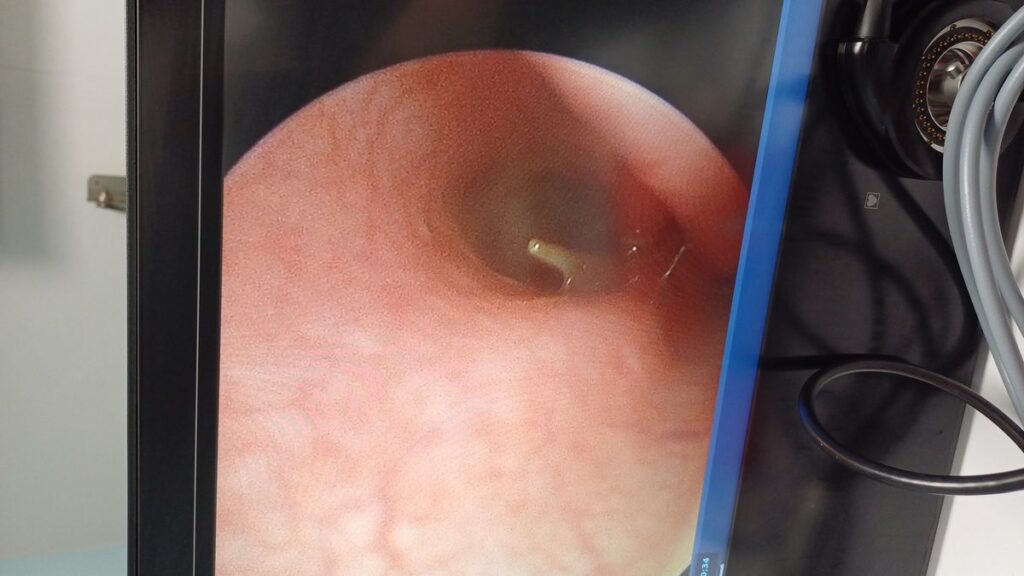
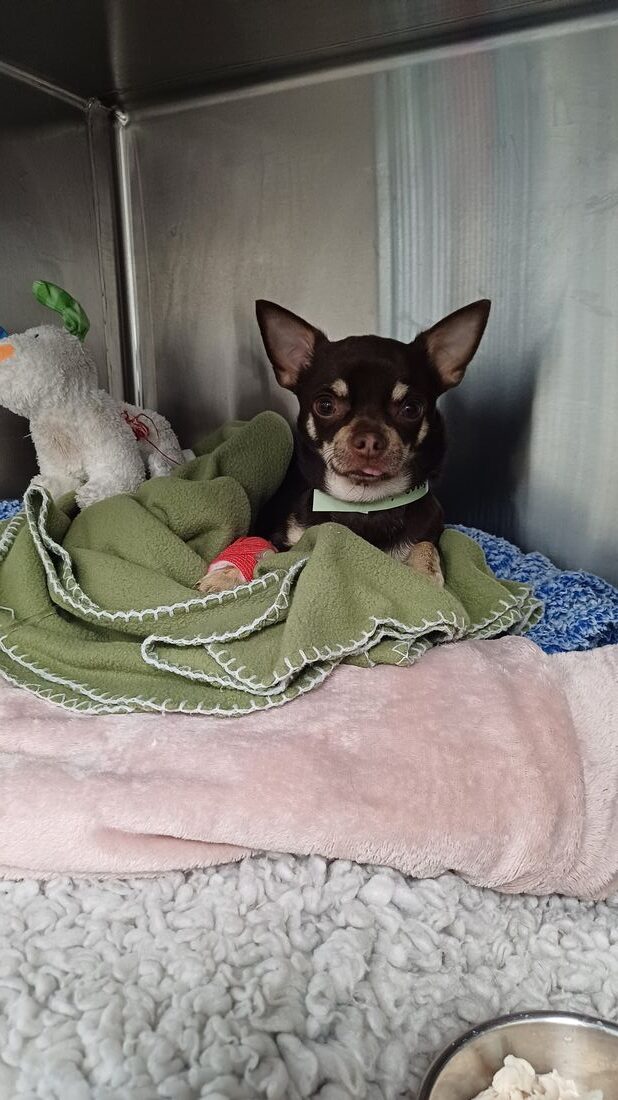
Acute onset. Sudden sneezing, coughing or retching points first at an inhaled foreign body. In dogs that usually means a grass seed, and at this time of year they are everywhere (I pulled one out of a Chihuahua’s nose only yesterday). In cats it is more often grass lodged in the nasopharynx. If the picture is more gagging and retching, it is worth having a look in the nasopharynx yourself first, in case something is sitting right at the back where you can retrieve it without a bigger procedure. Otherwise, acute sneezing, coughing or retching is one to refer promptly for imaging and rhinoscopy (the camera up the nose) to find the foreign body.
Chronic signs. Any dog or cat with chronic sneezing, snuffling, nasal discharge or bleeding is worth at least a conversation about advanced imaging with the owner. This is where the cancer figure bites. The earlier those cases are diagnosed, the better, so raising advanced imaging early is the sensible default. And if imaging is going ahead, it is worth having rhinoscopy and sampling available at the same time, so both can be done under one anaesthetic.
If you want a single rule of thumb: acute or chronic, the nose rarely rewards waiting.
Why “treat and see” tends to cost time
The cases that lose time are usually the chronic ones, and they lose it the same way. The common first moves are a course of anti-inflammatories, usually meloxicam, or a course of antibiotics, and the trouble is what that reasoning is built on.
Cats and dogs do not get colds the way people do. There is essentially always an underlying cause, so reaching for antibiotics is rarely the right call. They can appear to help, because a secondary infection sometimes sits on top of the real problem, so the signs settle and it feels like progress, but the underlying cause carries on unchecked behind the scenes. A definitive diagnosis early, and management aimed at the actual cause, is what gets the owner on track and gives the patient the best outcome.
The one fair exception is the acute sneezing case that has already stopped sneezing, where the owner is not sure whether the foreign body has been sneezed out. There, a short course of anti-inflammatories is not unreasonable as a first step. If the sneezing settles, there may have been something there that has now gone and the inflammation has calmed. If the signs continue after a couple of days, something is probably still up there, and that is your cue.
The four things behind the signs, and why you can’t tell them apart from the outside
Chronic nasal signs tend to come down to four buckets.
Neoplasia. The big one, given that 30 to 40% figure. Two types dominate. In cats, lymphoma, which can respond very well to chemotherapy. In cats and dogs, adenocarcinoma, which tends to respond well to radiotherapy. For both, earlier knowledge means better options.
Chronic inflammatory rhinitis. A chronic immune-type inflammation in the nose, a little like asthma in people (people get a version of this too). It is linked to hypersensitivity and is probably genetic, and it is commonly a lifelong, frustrating disease whose signs often never fully resolve, even with management. That is exactly why a clear diagnosis early matters. If you already know the signs may not completely go away, you want to be confident nothing else is being missed, rather than carrying a nagging “have we got the right diagnosis” for years.
Fungal disease. More common in the longer-nosed breeds, German Shepherds among them. It needs very specific treatment and will not respond to anything we would use for the other conditions. That means antifungals, often applied inside the nose as creams and washes, and commonly physical debridement of the fungal tissue, which means some sizeable procedures. The sooner it is identified the better, because the fungus eats through the tissues of the nose, and the longer it is left the more permanent the damage. A nose left structurally damaged is then more prone to inflammation and infection later, so time genuinely changes the outcome here.
Foreign body. The acute group above, but they can present sub-acutely too.
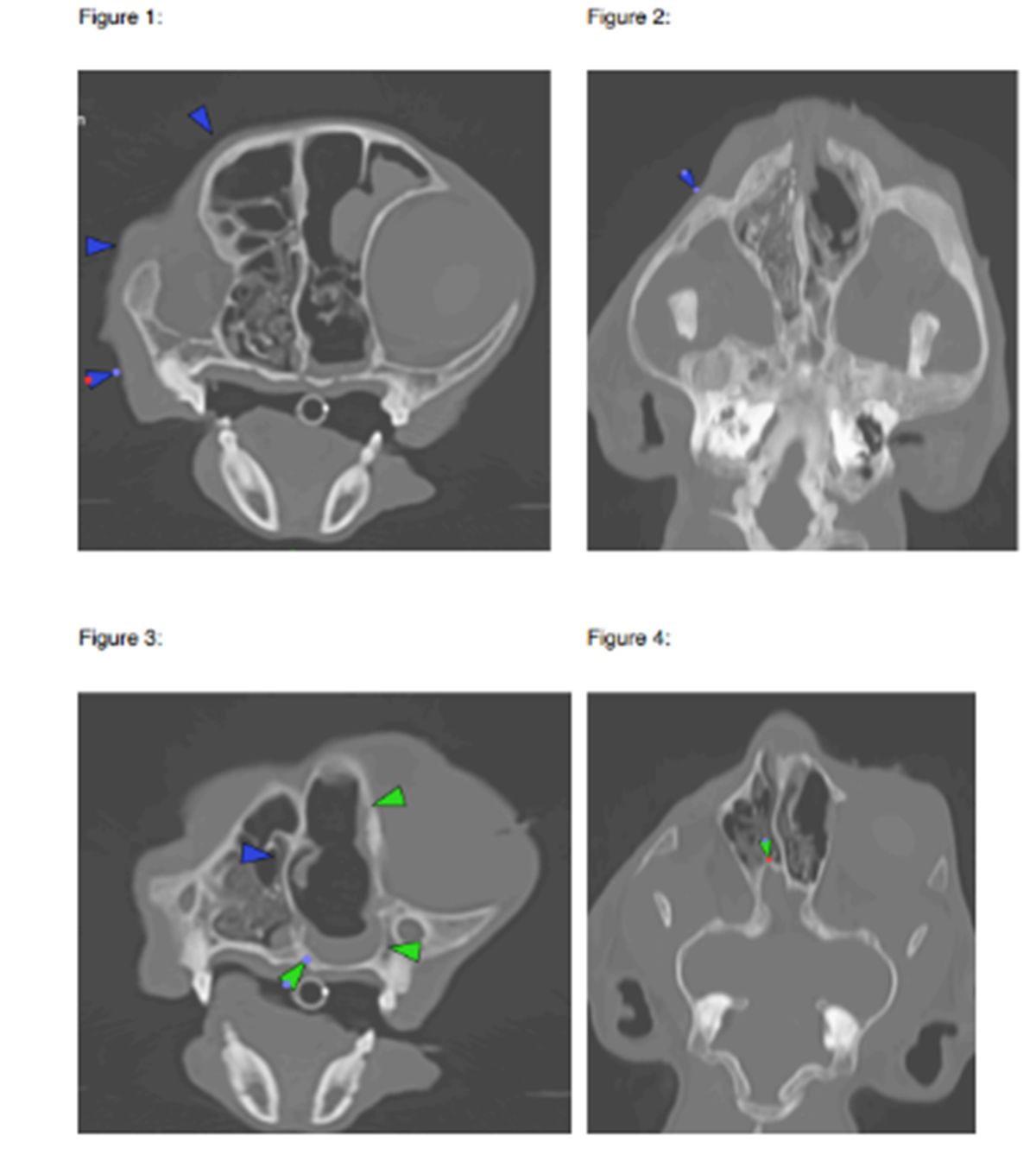
The reason none of these can be told apart without CT or rhinoscopy is simple anatomy. The nose is a bony case packed with fine scrolls of bone and cartilage, so there is no way to know from the outside what is going on inside. There are a couple of partial exceptions. Cryptococcus in cats can cause deformity of the nose and face, and some tumours eventually spread into the surrounding area. But by the time anything shows externally, a swollen face, an eye being pushed forward, swelling over the bridge of the nose, the disease is usually very advanced. Waiting for an external sign is not a safe strategy.
What a nasal work-up at SEVR actually looks like
There are two ways in. The owner can have a telephone consult first, where I run through the differentials and they decide whether they want to investigate. Or, if they already know they want to go ahead, they can come straight in, and most of the time I can do the whole work-up on the same visit. If they would rather come for the first consult and return another day for the investigation, that is equally fine.
On the day, the patient is usually admitted in the morning, with no breakfast so they are safe for an anaesthetic. We tend to anaesthetise nasal and breathing cases in the mornings to keep them as safe as possible. They can bring a toy, which we label as their own. After full pre-anaesthetic checks, and for nasal cases full bloods and clotting times first (noses like to bleed, so I want to know they can clot before I sample anything), they go under and into CT.
One of the advantages of how we are set up is that I talk to our imager in real time. Emma Corbett, an advanced practitioner with a specialty in imaging including CT, gives an initial verbal read while the patient is still under, so we can already see whether there is a mass or a foreign body and act on it then and there. From CT they move through to rhinoscopy. I place a local nerve block so they do not feel the camera, then we go in from the front with a rigid scope to see, sample and remove, and with a flexible scope via the mouth to look up the back of the nose from the other end. If the lungs need checking, we can do that too.
Then they wake up, get some fluids to flush out the CT contrast and a bit of lunch, and most go home the same day. Our admin team lets the owner know when the patient goes into CT and again when they are waking up, and I call to run through the basics and arrange the go-home time. I produce a full printed discharge letter, and I will happily bring my laptop down to walk the owner through the CT and rhinoscopy images if they would like to see them. Biopsy results usually come back within a couple of days to a week, after which I have a follow-up phone consult to talk through what we found and the plan, and we check in with the owner the next day too.
For the referring vet, if there was a telephone consult first, I will let you know the agreed plan and timing. After the investigation I send a discharge letter, usually same day or the next, with the initial CT findings, then a further update once biopsies report. Feedback, questions and queries are always welcome.
Two cases that show why early matters
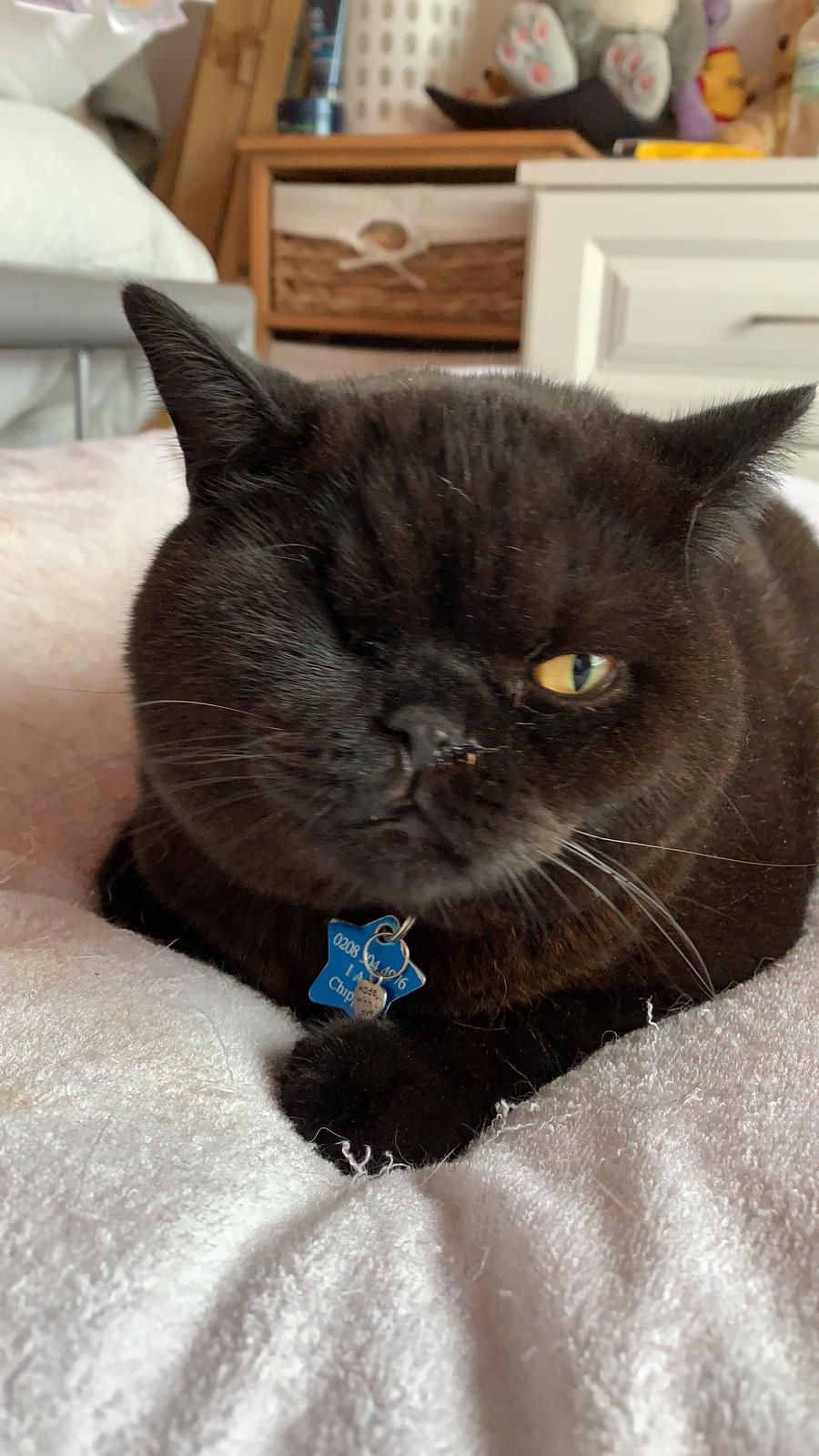
A cat that had, years earlier, a full CT, rhinoscopy and biopsies, and a diagnosis of suspected inflammatory rhinitis. It was managed for a long time, but more recently the signs worsened, and rather than reinvestigate whether something had changed, the case was kept on anti-inflammatories and various antibiotics. By the time it reached me, there was external change, the eye being pushed out, swelling of that side of the face, which usually means very extensive disease. It turned out to be extensive lymphoma. We did start chemotherapy and the cancer itself actually responded well, but by then the cat was too unwell to tolerate the level of treatment it needed. Picked up earlier, the outcome could have been very different.
And a spaniel referred with snuffling and nasal signs, where the referring vet reasonably wondered about a foreign body. We discussed imaging; the owner declined. By the time it came to me the mass was large enough to see from inside the mouth, having broken downwards through the palate rather than up over the bone, and it was a cancerous mass too advanced to do much for.
Neither story is about blame, both reads were reasonable on the day. They are about the same point. Until you have done the CT, you cannot know whether you are dealing with a foreign body or a mass, and the earlier we know, the more we can do.
What gets misunderstood about prognosis
The biggest misconception sits at both extremes, that a nasal mass means nothing can be done, or that surgery will sort it. In reality, surgery is most often not an option for nasal masses. Occasionally a mass right at the front of a dog’s nose is amenable, but most are not, and cats tolerate nasal cavity surgery very poorly.
What people miss is what is treatable. Lymphoma in cats can respond really well to chemotherapy, and cats tolerate it well. Animal chemotherapy is also widely misunderstood as being like human chemotherapy, and it is not. We are not aiming to cure and eradicate, we are aiming to slow the disease and push it toward remission, which we can often achieve with nasal lymphoma in cats, frequently with minimal to no side effects.
The same broad picture holds in dogs. Radiotherapy for nasal tumours in dogs can work extremely well depending on where the tumour sits. We now have an oncologist on staff, our oncologist Dr Sarah Mason, who I work with closely and who has extensive experience in all aspects of oncology including radiotherapy. Radiotherapy itself is not something we offer on site, so the right case still means referral onward to a centre that does, with multiple anaesthetics and rounds. Sarah guides and coordinates those cases throughout, and for the right patient it is well worth it. We organise all of it.
The bottom line
Early referral matters for every nasal case, and for a different reason in each:
-
- If it is cancer, we want to know as early as possible to give the best treatment.
- If it is a foreign body, we want it out, because the longer it stays the more inflammation it causes (and, rarely, the small risk it is inhaled into the lungs).
- If it is chronic rhinitis, which usually is not life-threatening but is frustrating and often lifelong, a definitive diagnosis early saves the owner a lifetime of “are we sure that is what it is?”.
If you have a nose in front of you and you are not sure, the easiest thing is to call and talk it through.