Ophthalmology
Cherry Eye
Prolapsed Nictitans Gland
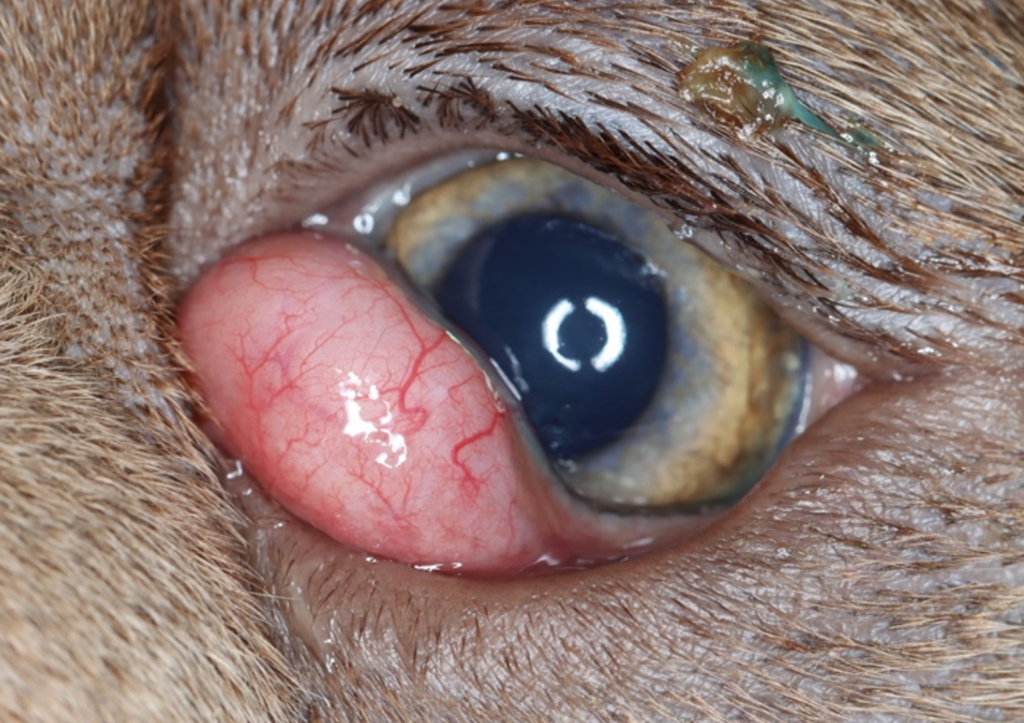
What is a prolapsed Nictitans gland?
The Nictitans gland is an important gland that produces part of the tear film in dogs, cats and some other animals. It sits below the eye, at the base of the nictitating membrane (‘third eyelid’). In some young dogs, and occasionally cats, the connections that keep the gland in place are not strong enough and is bulges up over the edge of the third eyelid, beneath the tissue covering that area. Some breeds are at an increased risk, including English bulldogs.
What is the treatment?
The gland must be put back into a more normal position, otherwise it will become inflamed and damaged over time.
Can’t the gland just be removed?
Removing the gland is not advised, as we know that removing it will affect the tear quality and can lead to ‘dry eye’. The signs may not be seen for a few years, but dry eye disease can be very difficult to manage.
What does surgery involve?
There are many different surgical techniques described, which shows that there is no perfect technique. The ideal technique would reposition the gland, preserve function, preserve the mobility of the third eyelid and have no risk of failure. To date, no technique described is without some risk of failure or complications. The main technique we use here involves creating a pocket in the tissue at the base of the third eyelid, to tuck the gland back into and secure it with sutures. This may also be combined with a second technique that involves suturing the gland to the bone at the edge of the eye socket.
What does the post-operative care involve?
Patients that have had surgery usually wear an Elizabethan collar for two weeks and after kept quieter than normal (walks on a lead, no playing with other dogs). Eye drops and pain relief are prescribed, and eye drops may sometimes be continued for a few weeks after surgery.