Ophthalmology
Corneal Endothelial Degeneration
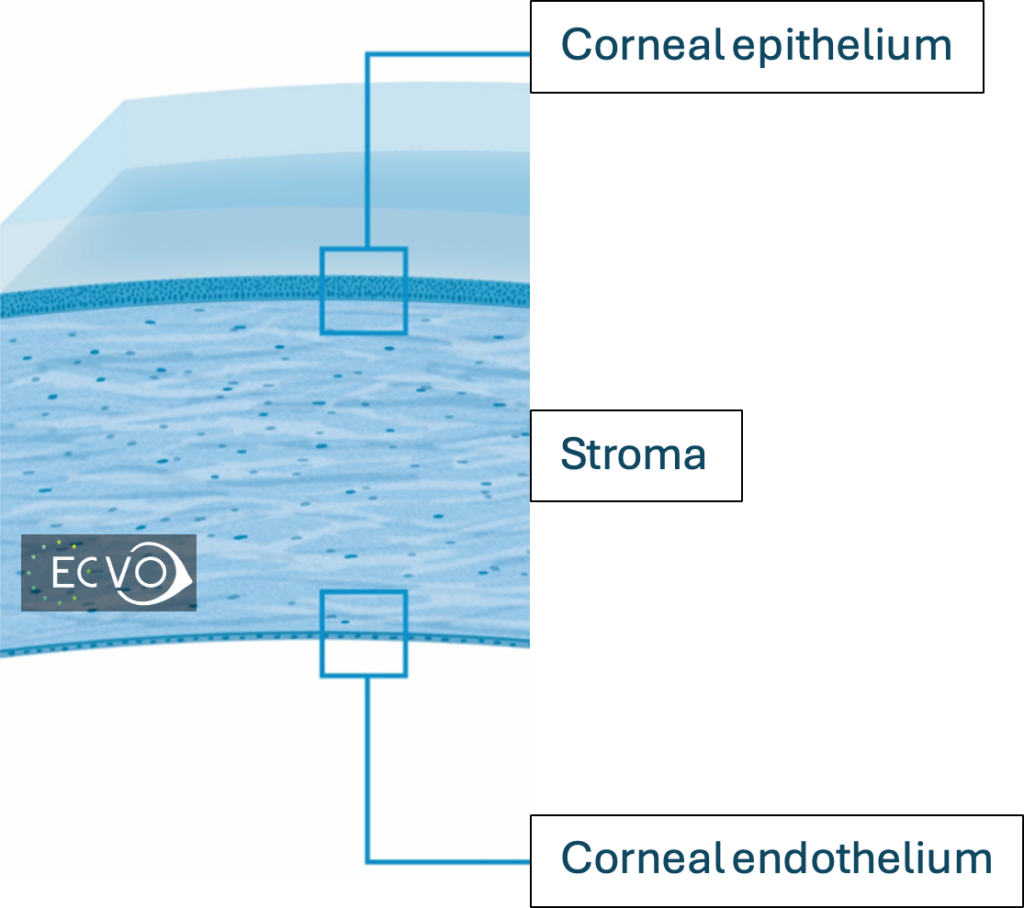
The cornea is the transparent windscreen of the eye. It consists of a surface ‘skin’, the corneal epithelium, the stroma (most of the thickness of the cornea, made of a strong protein called collagen), and the corneal endothelium, a single layer of cells on the inside of the cornea. The corneal endothelial cells are very important because they contain pumps which are constantly moving water out of the cornea. This is important because if the cornea becomes waterlogged (‘corneal oedema’), it becomes cloudy.
In adult dogs and humans, the cells that make up the corneal endothelium are not replaced like other body tissues. In some dogs (usually older dogs and certain breeds, such as Boston Terriers and Springer Spaniels) endothelial cells fail prematurely, leading to waterlogging of the cornea.
Is corneal oedema a problem, apart from affecting corneal transparency (and therefore vision)?
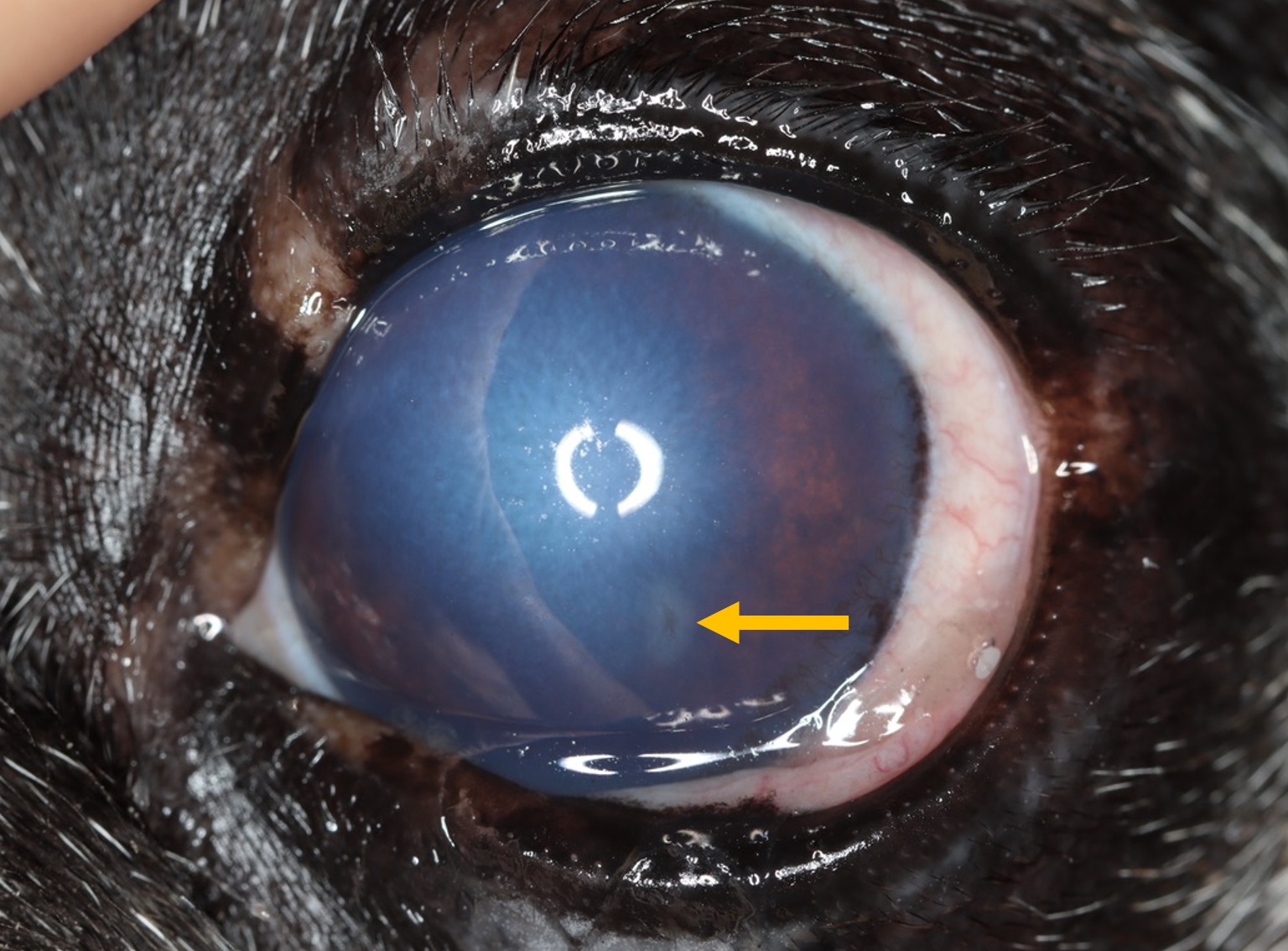
In patients with corneal endothelial degeneration, the cornea gradually becomes cloudier as it becomes more waterlogged (‘corneal oedema’). In addition to affecting vision, corneal oedema can lead to small blisters forming, which burst leading to breaks in the epithelium (the surface skin). These are called corneal ulcers and are uncomfortable.
How is endothelial degeneration treated?
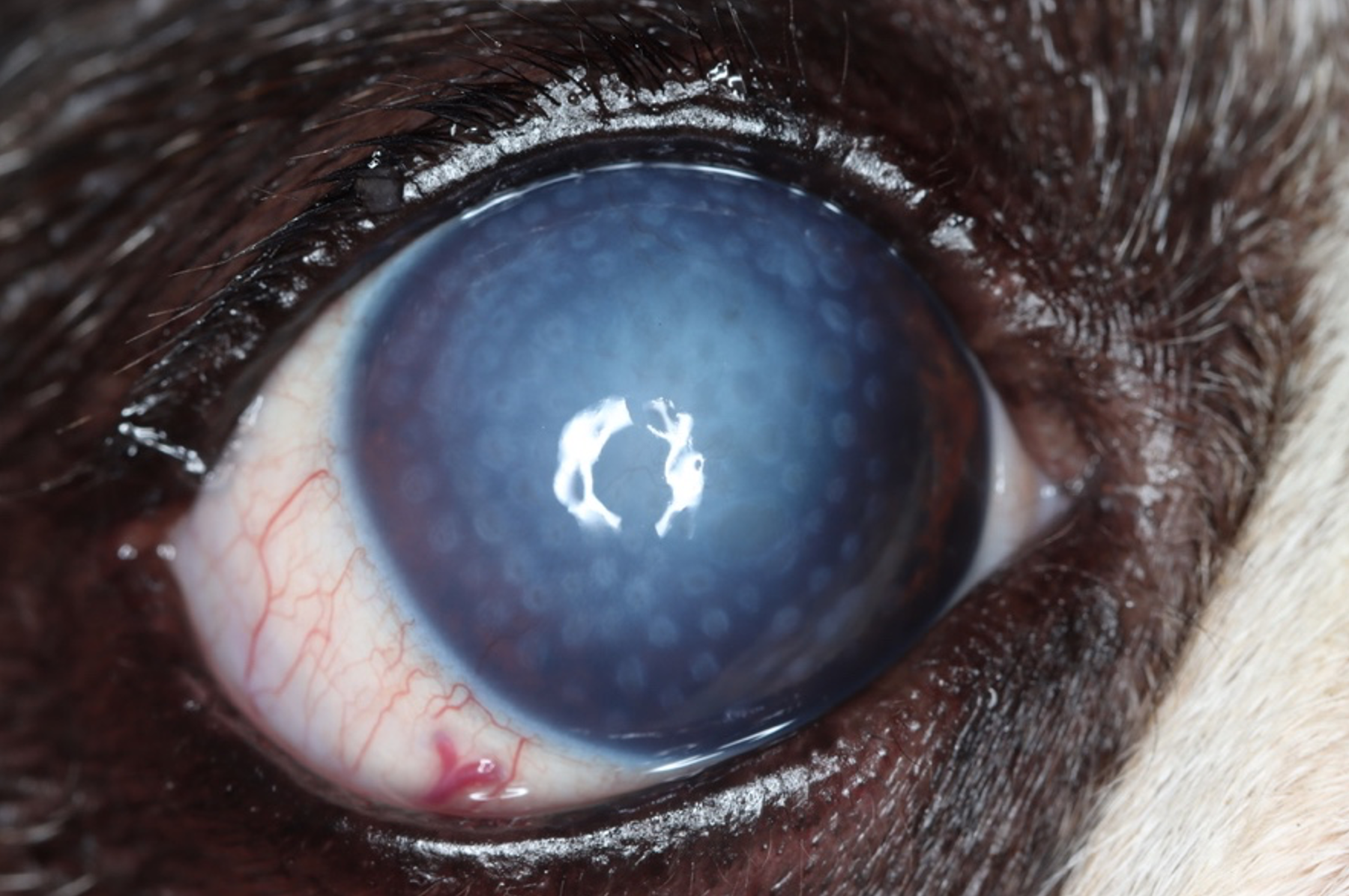
Endothelial degeneration is a progressive condition. While patients only have oedema, we use strong saline ointment to try and draw water out of the cornea and help keep it healthy. Once blisters and ulcers develop, surgical procedures are used. The main procedures used in dogs are surgeries where conjunctiva, the thin tissue that covers the white of the eye, is advanced onto the cornea, and thermokeratoplasty. The latter uses a heated probe to make superficial scars in the cornea, which help epithelium to stick down and prevent further ulcers.
What is involved in surgery?
We treat most dogs with endothelial degeneration with thermokeratoplasty, as it rapidly results in a comfortable eye. The procedure is performed under general anaesthesia and there are eye drops to administer after surgery. Dogs wear an Elizabethan collar initially, and a contact lens is placed on the eye to improve comfort. Follow-up appointments are needed to monitor healing.
What about the other eye?
Unfortunately, this is a condition that affects both eyes, although often one is affected before the other. The good news is that most dogs cope very well with endothelial degeneration with appropriate treatment.