
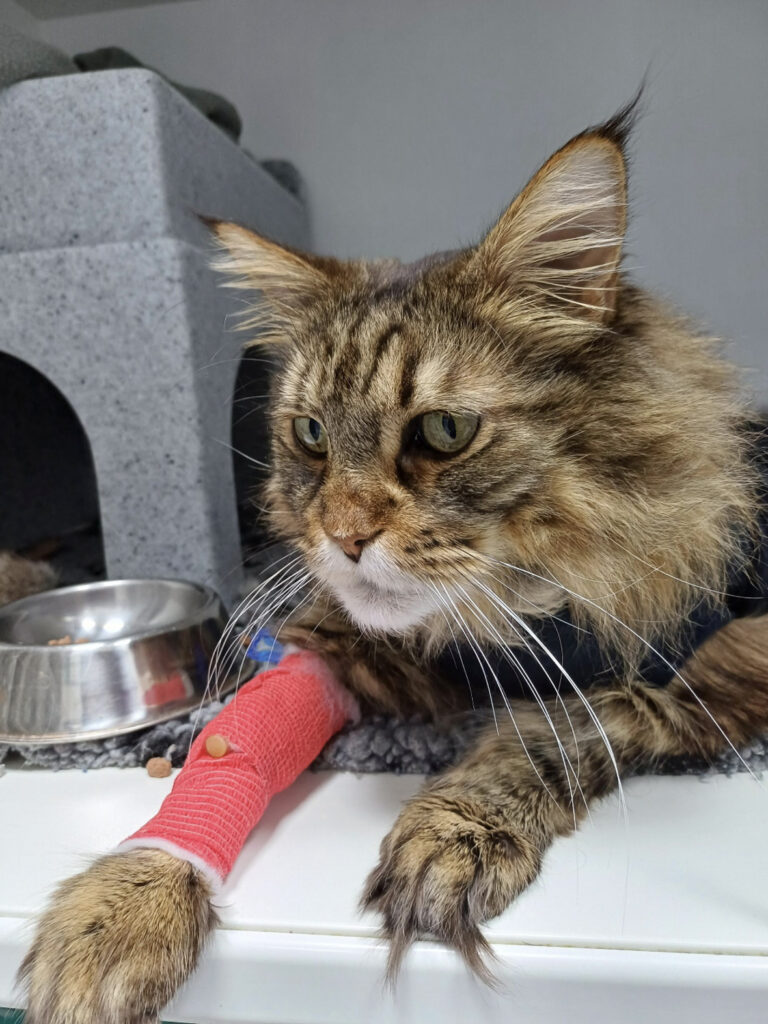
Freddie is an 11.5‑year‑old neutered male Maine Coon well known to his primary care practice. For several years, he has been managed successfully for chronic enteropathy on daily oral prednisolone, alongside gabapentin and monthly Solensia® for his concurrent spinal pain. His weight and clinical signs had been reassuringly stable, with the occasional dietary wobble quickly corrected.
However, over the New Year period, Freddie’s owners noticed polyuria. Blood work revealed a significantly elevated blood glucose, glucosuria, and a high fructosamine concentration, confirming newly developed diabetes mellitus.
Why Cats on Long‑term Steroids Develop Diabetes
Glucocorticoids antagonise insulin at multiple points:
- They impair insulin receptor signalling, reducing peripheral glucose uptake
- Promote hepatic gluconeogenesis
- Increase lipolysis, contributing to insulin resistance
In cats, who already have relatively low pancreatic β‑cell reserve and are prone to type 2‑like diabetes, chronic steroid exposure can tip the balance. Literature suggests that between 10-25% of cats on long‑term systemic glucocorticoids may develop diabetes, though true prevalence is difficult to quantify due to comorbidities and variation in dosing. Importantly, when the underlying cause of insulin resistance is removed early (e.g., stopping steroids), remission rates in steroid‑associated diabetes can be good, often quoted around 50–70%, particularly with tight glycaemic control and early intervention.
Management Plan for Freddie
Given Freddie’s reliance on steroids to manage his enteropathy, a full withdrawal would likely precipitate relapse. Instead, we have transitioned him from oral prednisolone to budesonide, a glucocorticoid designed for predominantly local gastrointestinal effect with greatly reduced systemic absorption. This should help minimise continued insulin resistance whilst still supporting his gut.
We will also revisit dietary trials, including novel or hydrolysed protein options, to assess whether further steroid‑sparing improvement in CE control is possible.
Whilst we initially prescribed Prozinc® insulin as a feline licensed option, given the nature of feline diabetes, we subsequently transitioned him to a long‑acting basal insulin (glargine U300 – Toujeo). The basal/longer acting formulation more closely mimics the normal feline physiological patterns often leading to superior glycaemic control.
Could This Be More Than Steroid-Induced Diabetes?
Although steroid exposure is the most likely culprit, acromegaly (hypersomatotropism) remains an important differential in any older male cat newly diagnosed with diabetes, particularly if insulin requirements escalate or glycaemic control is unexpectedly poor. We plan to investigate further once initial stabilisation is underway, with an IGF‑1 test considered at a later date.
Prognosis and Remission Outlook
If budesonide successfully reduces Freddie’s systemic steroid load, and if diet trials improve his enteropathy control, we are cautiously optimistic. Should insulin resistance fall and the pancreas respond, Freddie stands a reasonable chance of diabetic remission.
For now, Freddie remains his bright and happy, blissfully unaware of the sophisticated endocrine juggling his team is undertaking.